You’re chewing comfortably. Your morning coffee feels fine. Then, at your dental visit, you hear that a tooth may need a crown.
It’s reasonable to want an explanation. What is the crown meant to fix if nothing is bothering you?
Sometimes, the recommendation is about protecting a weakened tooth rather than treating a toothache. Understanding that difference can make the conversation much clearer.
Feeling fine is useful information—but it isn’t the whole examination
Tell your dentist how the tooth feels. That matters. But symptoms are only part of the picture.
For example, early tooth decay usually has no symptoms. An examination and, when appropriate, dental X-rays can reveal problems you haven’t noticed yet. That does not mean every painless cavity needs a crown; it means comfort alone cannot tell us which treatment a tooth needs. [1]
Your dentist should explain the specific finding behind the recommendation.
What is a crown supposed to do?
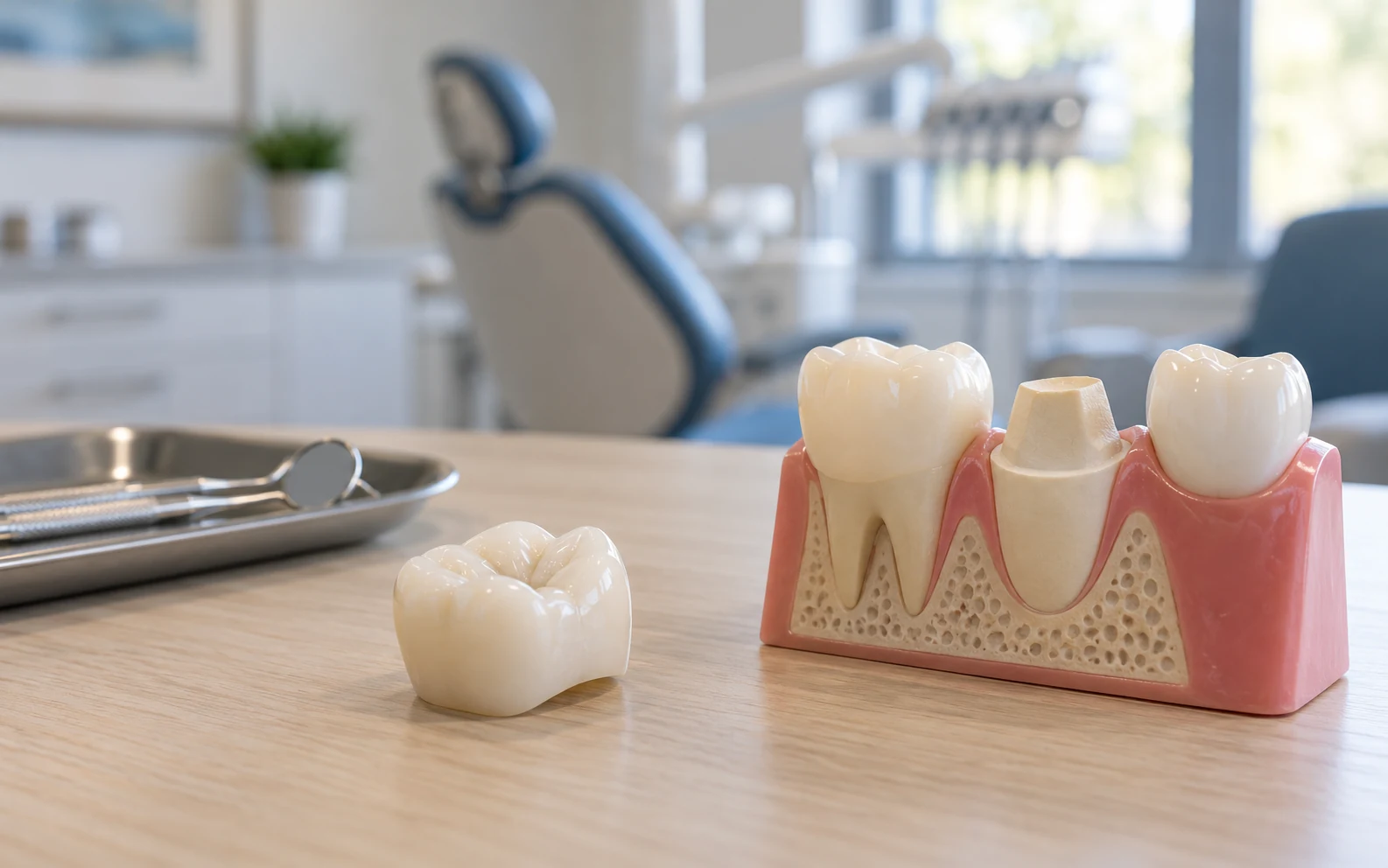
A crown is a custom restoration that covers a tooth to help restore its shape, size, and strength. The American Dental Association lists several reasons a dentist might recommend one, including protecting a weak tooth, restoring a broken tooth, or strengthening a tooth with a large filling when too little natural tooth remains to support that filling. [2]
In those situations, the question is how to restore and support the tooth—not simply whether it hurts today.
Does an old filling automatically mean I need a crown?
No. The age of a filling alone does not explain why a crown is being recommended. Ask what has changed and what the dentist sees now.
A filling repairs a cavity by replacing the decayed area with a restorative material. A badly broken-down tooth may need a different approach, such as a crown. Fillings and crowns can also need replacement over time. [3]
The useful conversation is about your particular tooth: how much healthy structure remains, what is damaged, and whether another filling would provide adequate support.
Four questions worth asking
You do not need to know dental terminology to take part in the decision. These questions are a good place to start:
- What specifically makes you recommend a crown for this tooth? Ask to see a photograph, X-ray, or explanation of the finding, where helpful.
- Could a smaller restoration or monitoring be appropriate? Ask about the reasonable alternatives and their tradeoffs.
- How soon do you recommend treatment? Discuss the tooth’s condition, the risks of waiting, and what changes should prompt a call.
- What will treatment involve and cost? Ask about preparation, materials, the visit plan, and your written estimate before deciding.
A recommendation should come with a conversation
You deserve to understand what is being recommended and why. “It doesn’t hurt” is a useful starting point for that discussion.
At Queens Long Island Dental Care, Dr. Ben Schwartz and our team will walk you through the findings and help you understand your options. If you have questions about a crown recommendation, schedule a visit at our Valley Stream office, near the Five Towns.
Sources & further reading
General educational information only; not a substitute for an examination or personalized dental advice.